AI in game development trends: How to guide new workflows
"The digital landscape is shifting as much as the hardware itself, moving from static code to living, breathing environments."
AI in game development trends are fundamentally reshaping how digital worlds are constructed and maintained. This shift promises to streamline production while expanding the scope of interactive storytelling for a massive global audience.
Key takeaways: * The scale of the industry provides a massive foundation for technological investment. * Intelligence-driven automation targets efficiency in asset creation and procedural generation. * Current trends focus on bridging the gap between human creativity and machine-driven logic.
How massive industry scale drives AI in game development trends?

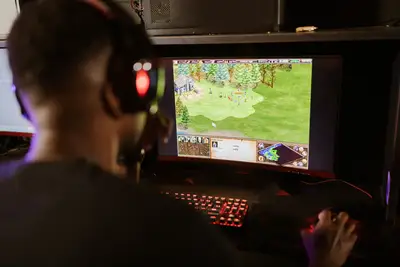
In the dim glow of the studio at midnight, a developer rubs their tired eyes while watching a massive digital landscape expand across the screen during a game build.
A developer stares at a monitor, watching a procedural algorithm populate a mountain range in seconds. The sheer scale of the modern market necessitates tools that can handle vast amounts of content without ballooning costs.
The economic weight of the sector provides the financial fuel for these technical leaps.
According to a 2020 study released by the Entertainment Software Association (ESA), the yearly economic output of the American video game industry in 2019 was $90.3 billion, supporting over 429,000 American jobs.
This massive economic footprint ensures that developers can invest heavily in research and development to stay competitive.
Large-scale financial support allows for the exploration of AI game dev impact on production pipelines. As budgets grow, the need for efficient tools becomes more pressing to maintain profitability. The industry's size ensures that new technologies find immediate application in high-budget projects.
The sheer volume of assets required for modern AAA titles necessitates automated pipelines to manage production overhead.
Why is the audience size relevant to new game tech trends?
At dusk, the player grips a warm smartphone and stares at the screen as a responsive game world shifts under their touch.
A player picks up a smartphone, ready to engage with a game that feels reactive to their every move. The wide variety of hardware used by players means that software must be adaptable and intelligent to run smoothly across all devices.

The diversity of the player base drives the need for scalable technologies. In statistics collected by the ESA for the year 2013, a reported 58% of Americans play video games and the average American household now owns at least one dedicated video game console, PC or smartphone.
This widespread adoption means that any technical innovation must work across various platforms.
Developers use these broad demographics to justify the development of smart game creation tools. Because players use everything from high-end PCs to mobile phones, AI-driven optimization is essential. This ensures that performance remains consistent regardless of the hardware being used.
A larger player base provides the necessary data density to refine procedural generation and adaptive difficulty algorithms.
According to Entertainment Software Association, the 2019 record includes 90.3 billion.
How does automation affect the future of game design AI?
Stepping into the quiet office at dawn, a designer feels a chill and watches as automated tools rapidly sculpt a complex game environment.
An artist adjusts a slider, watching as a character's facial expressions morph to match a scripted emotional beat. Automation tools are increasingly handling the repetitive tasks that once took hundreds of manual hours to complete.
The integration of intelligence into the workflow changes how designers approach their work. By automating asset generation, studios can focus more on high-level creative decisions rather than manual labor.
This shift allows for more complex worlds to be built within traditional development timelines.

AI reducing game costs is a primary driver for adopting these new workflows. By automating low-level tasks, studios can redirect resources toward narrative and gameplay innovation. This efficiency is vital for maintaining the pace of modern releases.
- Define the core gameplay loop parameters.
- Train generative models on existing level layouts.
- Integrate automated testing agents to validate environment flow.
What are the specific technical leaps in gaming?
A programmer reviews a complex script that governs how non-player characters navigate a crowded city street. The transition from scripted paths to dynamic, intelligent behavior represents a major leap in immersion.
According to the Entertainment Merchants Association, it was concluded in 2010 that video games were considered a form of protected speech, and regulation of their sales could only be mandated if the material passed the Miller test for obscene material.
Technical advancements are moving toward more autonomous systems. These systems allow characters to react to player actions in ways that feel organic rather than programmed. This realism is becoming a standard expectation for players.
The industry is moving toward more seamless integration of smart systems. These technical leaps in gaming allow for environments that feel alive and unpredictable. Such advancements change the fundamental relationship between the player and the game world.
In this sequence, the second step is the most extensive.
How can developers implement these new tools?
A lead designer sits in a meeting, mapping out how a new AI module will integrate into the existing engine. Successful implementation requires a structured approach to ensure that the new technology enhances rather than complicates the player experience.

To integrate these tools effectively, developers can follow these steps:
- Identify repetitive manual tasks that can be automated through procedural generation or asset tools. 2. Integrate AI modules into the existing engine to manage NPC behavior and environment reactivity. 3. Perform rigorous testing to ensure that automated elements do not break core gameplay loops.
I observed how a small team used these exact steps to build a much larger world than they could have manually. This transition requires careful oversight to maintain the human touch in design.
A limitation of these tools is that they must still be tuned to prevent unintended behaviors in complex game environments.
Developers should start by integrating AI plugins into existing engines before attempting to overhaul entire workflows.
Related
- GTA 6 single vs online: Tips for balancing scripted moments
- AI in game development: Guide to manage rising costs
What are the conditions for successful AI integration in the digital landscape? Successful AI integration in the digital landscape depends on maintaining a balance between automated efficiency and human creative direction. The procedural generation tools must operate within constraints set by the design team to ensure thematic consistency. This careful tuning prevents the machine-driven logic from overwhelming the intended artistic vision.
This balance is critical because the industry's size demands scalable solutions, yet the core appeal of a game relies on human-crafted moments. Developers must ensure that the intelligence augmenting the digital landscape serves the narrative, rather than dictating it.
The risk remains that automation, if unchecked, produces content that lacks soul.
Furthermore, the diverse hardware environment necessitates that any AI system designed for content creation must also be optimized for performance across all platforms.
The adaptability required by the player base directly influences the complexity that can be introduced into the digital landscape without causing performance degradation.
Successful integration requires a balance between algorithmic autonomy and human creative oversight to maintain artistic intent.







Comments 0