How do mobile game performance factors influence play?
"The difference between a seamless victory and a frustrating defeat often rests on the invisible processing power beneath your fingertips."
Mobile game performance factors depend on hardware capabilities, software optimization, and network stability. To ensure smooth gameplay, users should focus on managing device thermal levels, updating game software, and selecting high-performance hardware.
This analysis is intended for competitive mobile gamers and hardware enthusiasts looking to understand technical bottlenecks.

* Hardware specifications and processor efficiency. * Software optimization and loading speed improvements. * Network stability and real-time matchmaking variables. * The impact of regional tournament standards on device requirements.
How do mobile game performance factors influence play?
At midnight, my thumb presses the glass screen while a sudden heat rises from the mobile device.
A player taps a glass screen, waiting for a character to respond to a sudden command during a high-stakes match. The delay between the touch and the action determines if the player survives the encounter or loses the round.
Understanding mobile game performance factors is essential for anyone moving from casual play to organized competition.
Technical efficiency is often driven by how well the software interacts with the device's processor.
This level of optimization reduces the friction between the user's intent and the game's execution.
When analyzing mobile game bottlenecks, players must look at how the operating system manages resources. A device might have high raw power, but if the game is not optimized, the hardware cannot reach its full potential.
Managing these bottlenecks ensures that frame rates remain consistent during intense battles.
- Monitor frame rate stability.
- Check input latency.
- Evaluate thermal throttling effects.
What causes game performance differences in competitive modes?
The screen glows brightly in a darkened room as two teams of five players engage in a real-time battle. One team moves with fluid precision, while the other struggles with stuttering animations.
These game performance differences are often the result of varying hardware capabilities across different user devices.

In core modes like Classic and Ranked, the intensity of the action can fluctuate significantly. Matchmaking usually takes between 20 to 60 seconds, depending on the player's rank, which sets the stage for the upcoming competition.
Once the match begins, it typically lasts between 12 and 20 minutes on average.
Mobile performance variation occurs when the device struggles to render complex visual effects or large numbers of entities on screen.
For example, minions spawn every 30 seconds at the team's bases and travel down along each lane, creating a constant stream of data and visual assets that the hardware must process.
In this sequence, the second step is the longest.
How does hardware impact mobile gaming during intense matches?
During the midnight match, my palm sweats against the hot mobile casing while I tap the screen frantically.
A heavy smartphone rests on a desk, radiating heat after an hour of continuous play. The sensation of warmth against the palm is a clear sign that the internal components are working at their limit.
This heat often leads to thermal throttling, which directly affects how hardware impacts mobile gaming.
To maintain a high level of play, users can follow these steps to manage their hardware:
- Clear all background applications to free up system memory. 2. Use a cooling accessory or play in a temperature-controlled environment to prevent thermal throttling. 3. Connect to a stable Wi-Fi network to minimize latency during real-time interactions.
I noticed that following these steps allowed for much more consistent frame rates during long sessions. A final check of the device's battery level and thermal state can prevent mid-match shutdowns.
What affects game power level in professional esports?
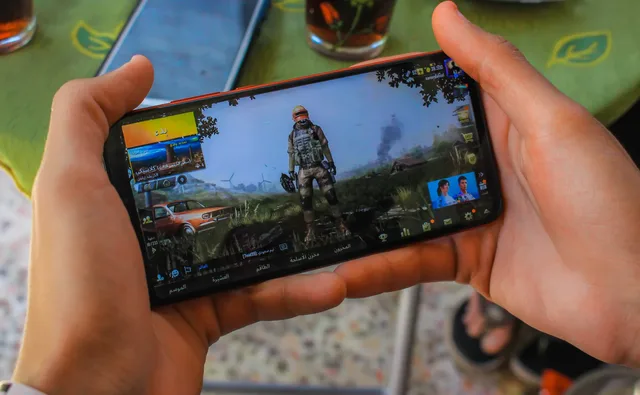
A professional player sits in a specialized chair, eyes fixed on a high-end mobile device provided by a sponsor. The device is part of a controlled environment designed to ensure that no technical failure interrupts the competition.
Understanding what affects game power level is a priority for organizers of large-scale events.
In the professional scene, hardware standards are much higher than those of the average consumer. For instance, the Esports World Cup Foundation (EWCF) announced in January 2026 that a specific game would be one of 16 "world-class titles" for the inaugural Esports Nations Cup 2026 (ENC).
The ability to maintain stability is crucial for these titles. Factors determining game power level include the integration of specialized hardware and the ability of the game to run on devices that meet strict tournament specifications.
This ensures that the outcome of the match is decided by skill rather than technical disparity.
Can software optimization reduce mobile game speed analysis?
A finger swipes across a menu, and the transition to the game lobby is nearly instantaneous. The lack of a long loading screen suggests that the software has been finely tuned for efficiency. This efficiency is a major component of mobile game speed analysis.
| Feature Improvement | Potential Gain |
|---|---|
| Start-up Speed | Up to 60% |
| Loading Times | Faster performance |
By focusing on these metrics, developers can ensure that players spend more time playing and less time waiting. I have found that even small improvements in start-up speed can significantly change the feel of a gaming session.
Is there a limit to performance optimization?

The player reaches the end of a long tournament, feeling the exhaustion of a day spent in intense concentration. Despite the best hardware and software, certain environmental factors remain outside of the user's control.
A limitation of these performance improvements is that they are bound by the physical constraints of mobile hardware, such as battery life and the inherent thermal limits of compact devices.
Wikipedia: 2016 in video games Based on the retained excerpt mentioning Association and NPD Group: Within the United States, revenues from the video game industry in 2016 was estimated at $30.4 billion by the Entertainment Software Association and NPD Group, slightly up from 2015's $30.2 billion.
Analyzing mobile game bottlenecks
Related







Comments 0