Shooting game hardware guide: How to achieve seamless action
"Choosing the right hardware is the difference between a seamless experience and a frustrating disconnect from the action on screen."
Selecting shooting game hardware requires a focus on input precision, response latency, and platform-specific compatibility to ensure every shot feels intentional.
This guide helps gamers evaluate peripherals and platforms, provides a comparison of magazine-compatible systems for specialized simulated mechanics, and outlines steps for optimizing setup. Note that hardware performance is limited by the specific software engine's ability to process rapid inputs.
What makes a shooting game hardware guide good?
In the dim midnight light, my fingers twitch against the mouse while seeking a shooting guide that captures the sharp click of every trigger pull. In the dim light of midnight, my fingers twitch against the mouse as I seek a shooting guide that captures the sharp click of every trigger pull.
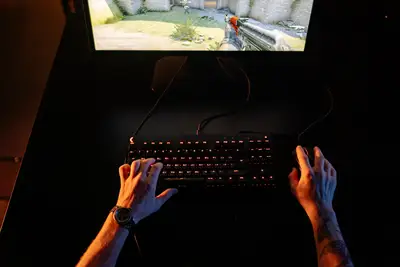
A player sits in a darkened room, the glow of a monitor reflecting off a mechanical keyboard as fingers hover over high-sensitivity keys. To build a reliable shooting game hardware guide, one must prioritize the tactile feedback of the mouse or controller and the refresh rate of the display.
A primary concern is the connection between the user's physical movement and the in-game response. High-polling rate mice reduce the delay between a hand flick and a crosshair movement, which is essential for competitive play.
Similarly, the choice between a mouse and a controller dictates the entire mechanical approach to aiming.
While technical specifications are vital, the best gaming hardware guide focuses on how these tools interact with the player's muscle memory. This includes evaluating the weight of the mouse and the tension of the analog sticks.
Effective hardware selection ensures that the device becomes an extension of the player rather than a barrier to skill.
A high-quality guide must prioritize technical precision, latency testing, and ergonomic considerations to ensure players receive actionable advice.
How to choose the best gaming hardware guide for your platform?
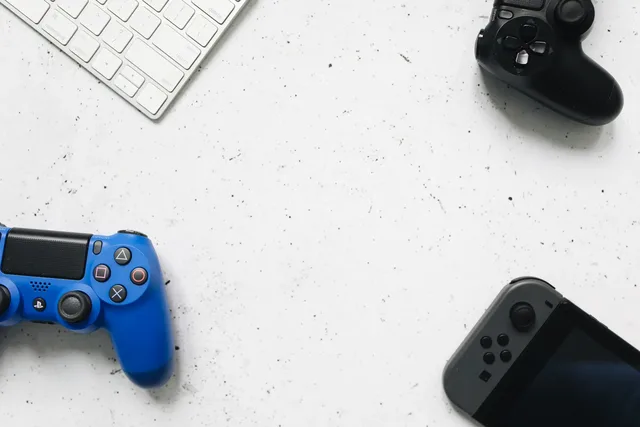
A gamer stares at a vast digital storefront, weighing the pros and cons of a high-end PC against the convenience of a handheld console. Finding the best gaming hardware guide involves understanding the ecosystem you intend to inhabit.
PC gaming offers the highest ceiling for customization, allowing users to swap out components like GPUs or specialized mice to suit specific titles. Conversely, consoles provide a streamlined, plug-and-play experience where hardware is optimized for a set of standard controllers.
Mobile gaming introduces a different layer, relying on touch sensitivity and varying screen aspect ratios.
Each platform offers distinct advantages for shooters. PC users often seek low-latency wired connections, while console players might prioritize haptic feedback in their controllers. Selecting the right platform depends on whether you value granular control or immediate accessibility.

Look for guides that focus specifically on your ecosystem, whether that involves PC peripheral compatibility or console-specific controller enhancements.
What are the essentials for a shooting game device guide?
The click of a button echoes in a quiet office as a user adjusts the sensitivity settings on a new peripheral. A comprehensive shooting game device guide must address the specific tools used to execute commands, such as mice, keyboards, and controllers.
Precision is the most critical factor when selecting a device. For mouse users, the sensor's ability to track micro-movements without jitter is paramount. For controller users, the deadzone settings and trigger pull resistance determine how accurately they can manage recoil or gradual acceleration.
A shooting game device guide should also consider ergonomic factors. Long sessions require hardware that prevents wrist strain and maintains comfort.
Whether it is a lightweight mouse for rapid flicking or a contoured controller for long-term grip, the physical interaction with the device is what ultimately drives performance.
Essential elements include sensor accuracy, polling rates, button actuation force, and weight distribution.
Can I use a gaming platform selection to improve my aim?
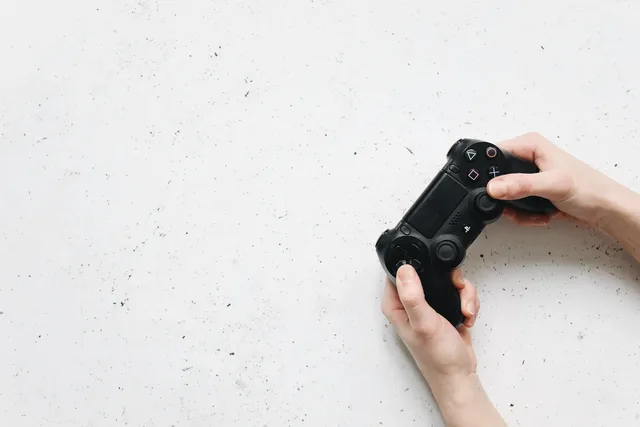
A player switches from a standard gamepad to a professional-grade controller, feeling the immediate difference in the trigger's resistance. Using a gaming platform selection strategy can significantly impact how you engage with different shooting genres.
Different platforms excel at different styles of combat. For example, tactical shooters often favor the precision of a mouse and keyboard, whereas fast-paced arcade shooters might feel more natural on a console with high-quality analog sticks.
The platform dictates the mechanical limits of your movement and aiming.

I found that adjusting my platform based on the game's movement speed made a noticeable difference in my ability to track targets. By matching the hardware's input method to the game's design, players can minimize the gap between intention and execution.
Selecting a platform with lower input lag and higher refresh rate support can significantly reduce the gap between your physical movement and on-screen action.
How do I optimize shooter performance with my gear?
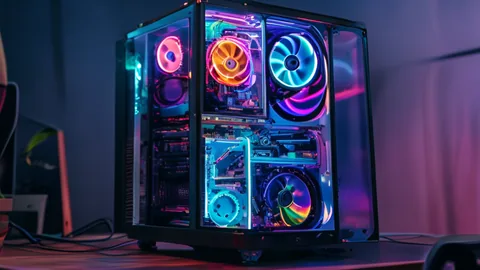
A technician opens a computer case, carefully seating a new component to ensure the system runs at peak capacity. To optimize shooter performance, players must look beyond the external peripherals and examine the internal system stability.
The interaction between hardware and software is the core of the experience. High frame rates are useless if the input lag from a wireless mouse makes the movement feel sluggish. Optimization requires a balance of high-speed processing and low-latency peripherals.
- Enable high-performance power settings in your operating system to ensure the CPU does not throttle during intense firefights. 2. Update all peripheral drivers to the latest versions to ensure the most recent firmware improvements are active. 3. Calibrate your in-game sensitivity to match the physical DPI of your mouse or the acceleration curve of your controller.
Perform a final check by testing the response time in a controlled environment to ensure no new lag has been introduced by the settings.
- Calibrate your mouse DPI and in-game sensitivity to match your physical mousepad space.
- Adjust your monitor's refresh rate and response time settings to minimize motion blur.
- Configure your audio settings to emphasize directional footsteps and environmental cues.
Hardware comparison for specialized magazine mechanics
A user examines a collection of specialized equipment, noting how different magazine systems interact with their primary tools. In certain simulation-heavy shooters, the way a device handles magazine changes or caliber compatibility can add a layer of tactical depth.
According to The International Shooting Sport Federation, the organization still administers Olympic and non-Olympic rifle, pistol, shotgun, and running target shooting competitions, even though many other national and international shooting sports are controlled by unrelated organizations.
| Feature | Henry Homesteader (2023) | Standard Carbine |
|---|---|---|
| Caliber | 9mm pistol caliber | Various |
| Magazine Compatibility | Proprietary, GLOCK, SIG Sauer, Smith & Wesson M&P | Specific to model |
The Henry Homesteader, released in 2023, is a 9mm pistol caliber carbine that features adapters to accept proprietary magazines or certain GLOCK, SIG Sauer, or Smith & Wesson M&P magazines. This level of mechanical complexity is often mirrored in high-fidelity gaming hardware simulations.
The effectiveness of these systems is limited by the specific software's ability to simulate the physical weight and reload speed of different magazine types.
Comparing hardware requires evaluating how different reload speeds and mechanical feedback affect your rhythm during high-intensity firefights.
Related






Comments 0